Free Weights vs. Resistance Bands vs. Cable Machines: The Ultimate Fitness Equipment Guide
Choosing the right equipment for strength training can feel overwhelming. With endless fitness trends, social media workouts, and conflicting advice, beginners and seasoned athletes alike often struggle to determine which modality yields the best results. The three primary contenders in resistance training are free weights (dumbbells, barbells, and kettlebells), resistance bands, and cable machines.
Each option offers unique biomechanical advantages, resistance profiles, and practical considerations. Whether your primary goal is muscle hypertrophy, raw power, fat loss, injury rehabilitation, or building a space-efficient home gym, understanding how these tools differ is essential for maximizing your training efficiency.
This comprehensive comparison breaks down the biomechanics, benefits, limitations, and real-world applications of free weights, resistance bands, and cable machines to help you make an informed decision tailored to your specific fitness journey.
Understanding the Contenders: Equipment Breakdown
Before comparing performance and results, it is crucial to understand how each piece of equipment generates resistance and interacts with human anatomy.
1. Free Weights
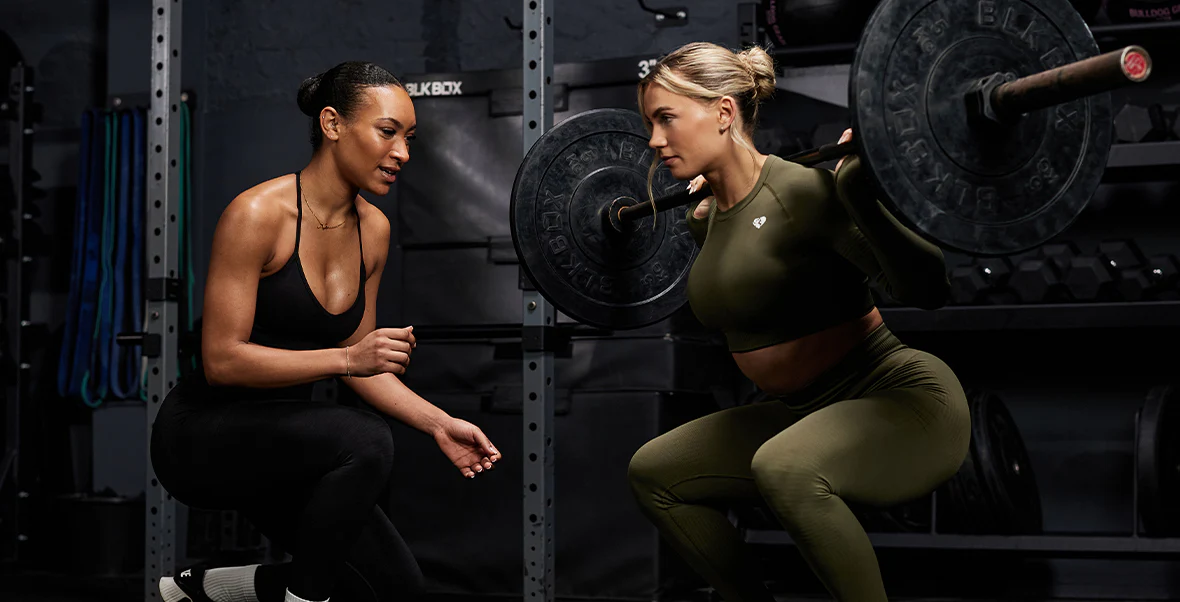
Free weights represent the traditional cornerstone of resistance training. This category includes dumbbells, barbells, kettlebells, and weight plates. The unifying characteristic of free weights is that they rely entirely on gravity to produce resistance. The load moves in a direct vertical line toward the earth, requiring the lifter to stabilize the weight across multiple planes of motion.
2. Resistance Bands
Resistance bands utilize elastic material—typically latex or heavy-duty fabric—to generate force through stretch tension. Available in continuous loops, tube bands with handles, and light therapy bands, this tool relies on elasticity rather than mass. As the band stretches, the force required to move it increases exponentially, offering dynamic dynamic tension throughout an exercise.
3. Cable Machines
Cable machines consist of weight stacks connected to pulleys and steel cables. While they use weight plates for resistance, the pulley system redirects the gravitational pull. This allows the lifter to experience constant force along virtually any vector or angle, bridging the gap between fixed machine movements and free-standing resistance.
Key Comparison Criteria: Head-to-Head Analysis
To evaluate which training tool best suits your objectives, we must analyze them across critical fitness parameters: resistance profile, muscle activation, safety, cost, and versatility.
1. Resistance Profile and Biomechanics
The concept of a resistance profile refers to how heavy a movement feels at different points in the range of motion.
- Free Weights: Resistance is constant in magnitude (a 20kg dumbbell always weighs 20kg), but the actual stress placed on the muscle changes based on moment arms and gravity vectors. For example, during a standing bicep curl, tension peaks when the forearm is parallel to the floor and drops significantly at the top and bottom of the movement.
- Resistance Bands: Bands feature a ascending resistance profile. At the beginning of a movement, when the band is slack, resistance is minimal. As you stretch the band toward full muscle contraction, resistance increases significantly. This matches the natural force curve of certain body movements but can leave muscles under-stimulated in the lengthened (stretched) position.
- Cable Machines: Cables deliver uniform mechanical tension throughout the complete range of motion. Because tension is provided by the continuous pull of the cable rather than direct gravity, muscle engagement remains consistent from the starting position to peak contraction.
2. Muscle Activation and Hypertrophy (Muscle Growth)
Muscle growth relies heavily on progressive overload, mechanical tension, and metabolic stress. How do these tools compare in driving physical adaptation?
Free weights excel at activating secondary stabilizer muscles. Because free weights are uncontrolled in three-dimensional space, your brain must recruit smaller supporting muscles—such as the rotator cuff during pressing or the core during squatting—to keep the weight balanced. This leads to high overall motor unit recruitment and exceptional core engagement.
Cable machines provide superior targeted mechanical tension. By isolating specific muscles without requiring extreme balance, cables allow lifters to push target muscles to localized failure safely. Research indicates that continuous tension under stretch—a highlight of cable training—is a primary driver of muscle hypertrophy.
Resistance bands are effective for building muscle, particularly for beginners and intermediate lifters. However, progressive overload is harder to quantify with bands. While you can track weight additions precisely on a barbell (e.g., adding 1.25kg plates), measuring exact resistance increases on elastic bands is difficult due to variable stretching distances and material degradation over time.
3. Safety, Joint Health, and Injury Rehabilitation
Safety considerations vary dramatically depending on your training history, age, and existing joint health.
Resistance Bands (Safest): Resistance bands present virtually zero risk of acute crush injuries. If your muscles fail mid-repetition, the band simply snaps back into its resting state without dropped weights. Additionally, because resistance builds progressively, joints experience less shock in vulnerable, fully lengthened positions. This makes bands the gold standard for physical therapy and joint prehab/rehab.
Cable Machines (Moderate Safety): Cables offer a controlled environment. Weight stacks can be secured with a pin, and range-of-motion limiters prevent weights from crashing onto the user. They are ideal for pushing close to muscular failure without needing a spotter.
Free Weights (Higher Risk): Heavy free weights require sound technique and stabilization. Failing on a heavy barbell bench press or back squat without safety bars or spotters carries inherent risks of joint strain, soft tissue tearing, or impact injury. However, free weights teach proper spatial awareness and build functional joint integrity when loaded correctly.
4. Cost, Space Efficiency, and Portability
For home fitness enthusiasts, spatial and financial constraints are often the primary deciding factors.
- Resistance Bands:
- Cost: Highly affordable (typically $20 to $60 for a full set).
- Space: Minimal. An entire home gym setup fits inside a small backpack or drawer.
- Portability: Unmatched. Perfect for business travelers or outdoor workouts.
- Free Weights:
- Cost: Moderate to High. Quality cast-iron or urethane weights are priced per pound or kilogram, making comprehensive dumbbell racks expensive. Adjustable dumbbells offer a more cost-effective middle ground.
- Space: Moderate. Requires floor reinforcement for heavy lifting and devoted storage space.
- Portability: Poor. Carrying heavy weights outside the home is impractical.
- Cable Machines:
- Cost: High. Commercial or quality home functional trainers range from several hundred to thousands of dollars.
- Space: Substantial. Functional trainers require significant height, width, and floor footprint.
- Portability: Non-existent. Stationary setup.
Comparison Summary Table
The following overview summarizes how each modality performs across major exercise categories:
- Progressive Overload Precision: Free Weights (Excellent) | Cable Machines (Excellent) | Resistance Bands (Fair)
- Constant Dynamic Tension: Free Weights (Moderate) | Cable Machines (Exceptional) | Resistance Bands (Variable)
- Stabilizer Recruitment: Free Weights (Exceptional) | Cable Machines (Moderate) | Resistance Bands (Moderate)
- Joint Safety & Low Impact: Free Weights (Moderate) | Cable Machines (High) | Resistance Bands (Exceptional)
- Home Gym Friendliness: Free Weights (Moderate) | Cable Machines (Low) | Resistance Bands (Exceptional)
- Maximum Raw Power Development: Free Weights (Exceptional) | Cable Machines (Moderate) | Resistance Bands (Low)
How to Choose the Right Equipment for Your Profile
Because no single option is absolute perfection across all scenarios, the ideal choice depends on your personal profile and primary objective.
1. The Pure Strength & Power Athlete
If your main goal is building maximal strength, dense skeletal load capacity, and explosive power, free weights are non-negotiable. Barbells and heavy dumbbells allow for absolute maximum mechanical loading, stimulating systemic bone density improvements and major central nervous system adaptations. Powerlifting, Olympic weightlifting, and strongman disciplines rely entirely on free weights.
2. The Bodybuilder & Aesthetic Specialist
If your goal is body sculpting, symmetrical muscle growth, and isolation, a combination of cable machines and free weights is ideal. Cables allow you to isolate muscle heads (such as the lateral deltoid or upper chest) with continuous tension without fatiguing your lower back or stabilizer muscles.
3. The Home Gym Enthusiast on a Budget
If you have limited space and budget, high-grade loop resistance bands paired with a set of adjustable dumbbells offer the best value. Bands can replace bulky pulley setups for movements like face pulls, lateral raises, and woodchoppers, while dumbbells provide reliable heavy resistance for compound presses and rows.
4. Frequent Travelers and Digital Nomads
For individuals who live on the road, resistance bands are the undisputed winner. A complete setup providing up to 150 lbs of cumulative tension weighs less than 3 lbs and can be anchored to hotel doors or park structures instantly.
5. Individuals in Injury Rehabilitation
If you are recovering from joint surgery, tendonitis, or chronic back issues, resistance bands and cable machines provide smooth movement patterns without the dangerous momentum peak seen in free weights. They allow for natural joint paths while minimizing shear stress on tendons.
The Hybrid Approach: Combining Modalities for Maximum Adaptation
Elite strength coaches rarely restrict athletes to a single equipment type. Instead, they leverage the strengths of each tool to create a dynamic training strategy known as variable resistance training.
Accommodating Resistance with Free Weights and Bands
One of the most effective strength-building techniques involves attaching resistance bands to barbells during compound lifts like the bench press, squat, or deadlift. This technique alters the movement's natural strength curve.
In a standard barbell back squat, the exercise is hardest at the bottom (the hole) and easiest near the top lockout position. By adding resistance bands to the barbell, the resistance increases as you rise out of the squat, forcing your muscles to exert maximum force throughout the entire movement. This eliminates the "sticking point" and accelerates power development.
Pre-Exhaust Strategy Using Cables and Free Weights
Another popular method combines isolation exercises on cable machines with heavy compound free-weight lifts. For example, performing cable chest flyes prior to a barbell bench press pre-fatiguing the pectoral muscles. When you move to the barbell press, your chest reaches full stimulation before your triceps or shoulders fail, ensuring maximum hypertrophy in the targeted area.
Sample Exercise Comparison: The Bicep Curl
To highlight the practical biomechanical differences between these three tools, consider how a standard bicep curl changes across each modality:
- Dumbbell Bicep Curl: High resistance in the middle range of motion when forearms are horizontal. Resistance drops to zero at the top position when the weight rests directly over the elbow joint. Stabilizers work hard to prevent upper arm movement.
- Cable Bicep Curl: Constant horizontal and vertical tension. Pulling force remains active even at peak contraction, requiring continuous engagement from the biceps brachii muscle fibers without resting at the top.
- Resistance Band Bicep Curl: Very light resistance at the bottom stretched position. Tension ramps up aggressively as your hands reach shoulder height. Forces incredible peak contraction, but offers reduced stretch-mediated hypertrophy benefits at the start of the movement.
Final Verdict
There is no single "best" equipment category in fitness; rather, there is only the best tool for a specific goal, space, and individual physical condition.
Free Weights remain the king of functional strength, bone density growth, and dynamic stability. Cable Machines offer unmatched smooth tension, isolation precision, and safety for muscle sculpting. Resistance Bands provide unprecedented portability, joint-friendly dynamic resistance, and versatile assistance tools for all fitness levels.
For optimal fitness longevity, aim to integrate elements of all three into your routine. By matching each equipment type to its biological and mechanical advantages, you can build a balanced, resilient, and highly performing physique.